
The general rule
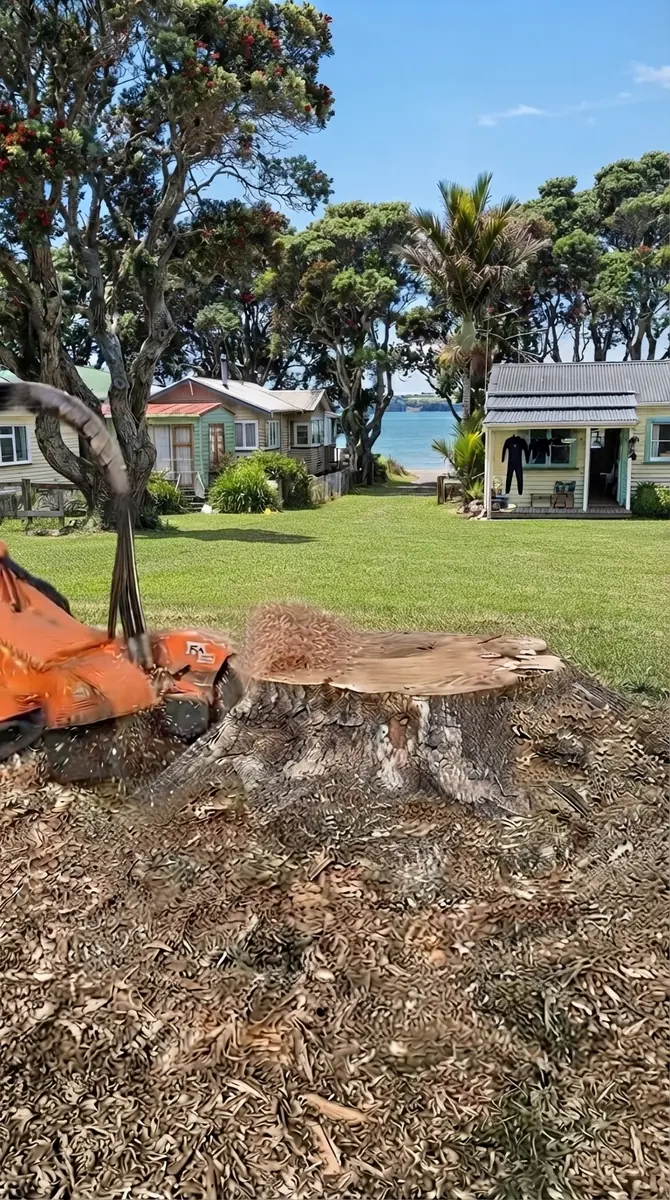
General tree protection in urba North Shore was removed by national law changes, so most trees on residential land can be removed without resource consent — and so can their stumps. If the tree is already down and the stump is all that's left, you're almost certainly clear to grind.
When you should check first
Rules still apply in specific situations. Check the Auckland Council GeoMaps property viewer or ring the council duty planner if any of these could apply to your property.
- Notable or scheduled trees listed in the Auckland Unitary Plan
- Trees inside a Significant Ecological Area (SEA) or on esplanade/reserve land
- Native vegetation clearance on larger or rural-zoned sites
- Trees on or overhanging a shared boundary — that's your neighbour's call too
- Council street trees and berm trees, which are never yours to remove
- Heritage overlays and some coastal or riparian yards
Kauri dieback
Kauri are a special case both legally and practically. Any work around kauri — including grinding a kauri stump — should follow kauri dieback hygiene: clean machinery arriving and leaving the site, and no soil movement between properties.
We wash the grinder down between bush-edge properties as standard. It's a fair question to ask any operator before they drive onto a Titirangi or bush-boundary section.
Boundary and shared trees
If the trunk straddles the boundary, the tree is legally shared and both owners need to agree before it or its stump goes. Get it in writing — a text message is enough — before booking. We'll happily quote either way, but we won't grind a disputed boundary stump.
What we handle for you
We're not a consenting service, but after years of Auckland work we can usually tell you in a phone call whether your job is routine or worth a check with council first. Call 0800 856 508 and describe the tree, the species and the location on the section.
Common questions
- Do I need a permit to grind a tree stump in Auckland?
- In almost all cases, no. Grinding the stump of a lawfully removed tree on a normal urban residential section doesn't require resource consent. Consent can be needed for notable or scheduled trees, Significant Ecological Areas, some native vegetation clearance and heritage-overlay sites.
- How do I know if my tree is protected in Auckland?
- Search your address in Auckland Council's GeoMaps property viewer and look for notable-tree, SEA or heritage overlays, or call the council duty planner. If it's flagged, get advice before any work starts.
- Can I remove a stump on the boundary with my neighbour?
- Only with the neighbour's agreement if the trunk straddles the boundary — the tree is jointly owned. Anything wholly on your side of the boundary is your decision.